If you are a dealer in Africa, the Middle East, or Central Asia, you know what your customers want: Reliability, Low Running Costs, and Strong Resale Value.
Chinese-made Toyota vehicles deliver exactly that. They are not just affordable; they are built to global standards. Here is why they should be your next export priority.
I. 🚗 A Legacy of Quality: Toyota in China
Toyota’s history in China began in 1964. That year, the first Crown model arrived. It marked the start of a long journey.
Over 60 years later, Toyota is stronger than ever. In 1998, they built their first factory.Today, they have two major joint ventures:
- FAW Toyota
- GAC Toyota
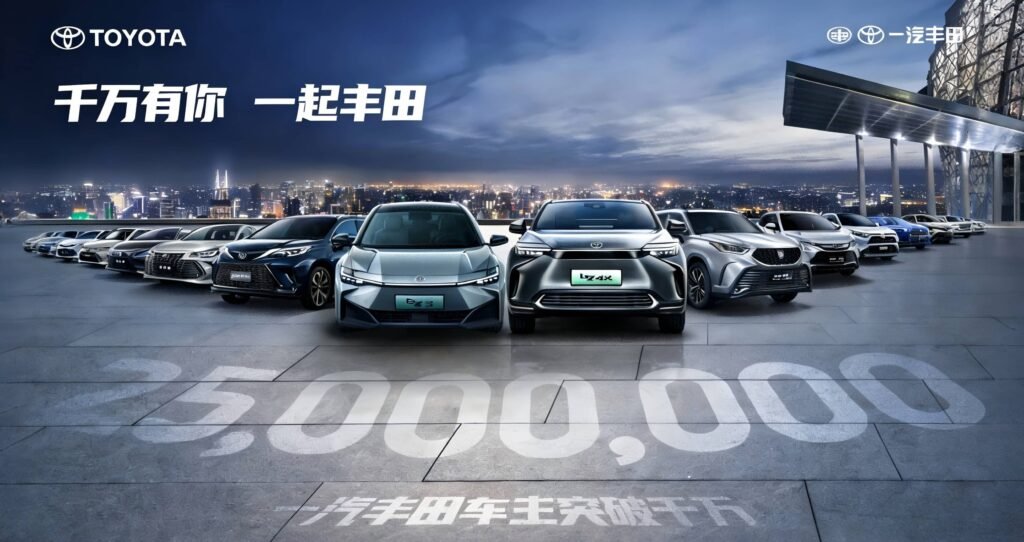
Toyota has built a complete local ecosystem. They were the first Japanese brand to sell 25 million cars in China. This massive base creates abundant used car sources.
China is a core pillar of Toyota’s global strategy. In 2024, Toyota sold 10.82 million cars worldwide.
China (including Lexus) contributed 1.77 million units. That is over 16% of our global sales. It makes China their second-largest market.
Toyota China’s production capacity remains strong.
In 2024:
- FAW Toyota sold 800,000 units.
- GAC Toyota sold 770,000 units.
- Total output has exceeded 10 million units.
This huge new car ownership creates a steady flow of high-quality used cars.
It provides stable and sufficient supply for our overseas business.
II. Global-Consistent, Quality You Can Trust
Worried about quality differences? Don’t be.
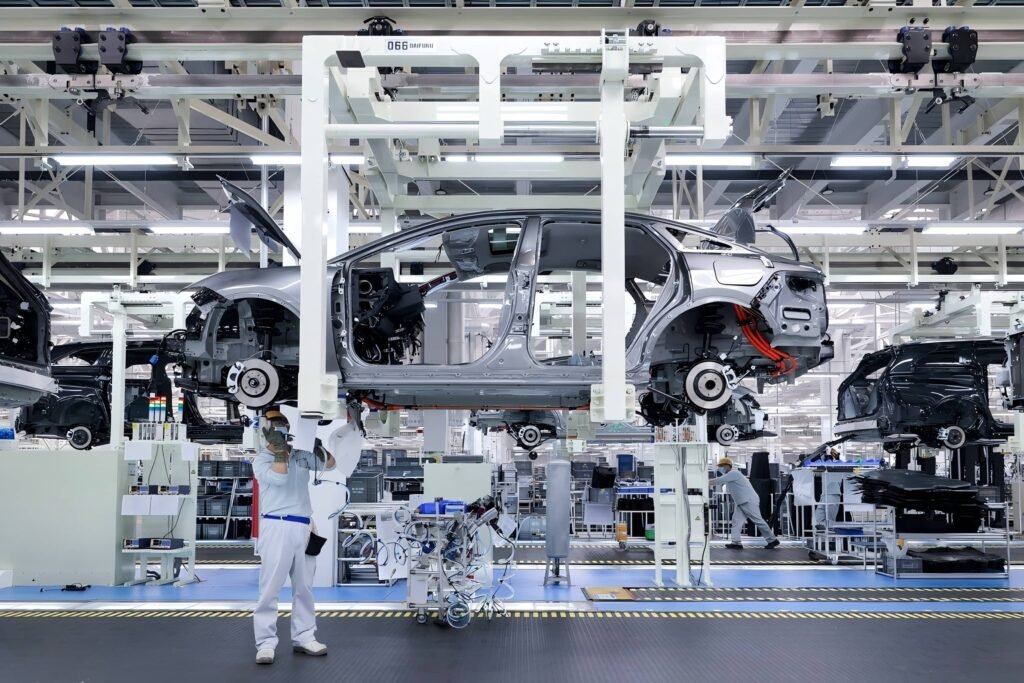
Toyota factories worldwide follow the same standard: TPS.
The GAC Toyota Nansha Plant in China has won the Global Quality Gold Award. Its quality matches factories in Japan. The data proves it.
FAW Toyota has a failure rate of just 132 PP100. This is on par with North American Toyota (129 PP100).
It even beats some German joint ventures.
Chinese-made Toyotas are also tougher. They are upgraded for rough roads.
For example:
The RAV4 has 20% thicker suspension bushings than the European version.
The Camry has 15% more sound insulation than the American version.
These upgrades are perfect for your market.
They handle the bumps in Africa, the heat in the Middle East, and the tough terrain in Central Asia.
🛠️ Built For Your Climate
Cars made in China are tested in extreme conditions.
- Heat: They are proven in the hot summers of Southern China, perfect for the Middle East.
- Dust & Gravel: The suspension is tuned for rough roads, making them perfect for African terrain.
III. ⚡ The Hybrid Advantage
Today, Hybrid is the keyword for profit.
Toyota has made hybrid technology standard in China. The best part? The price.
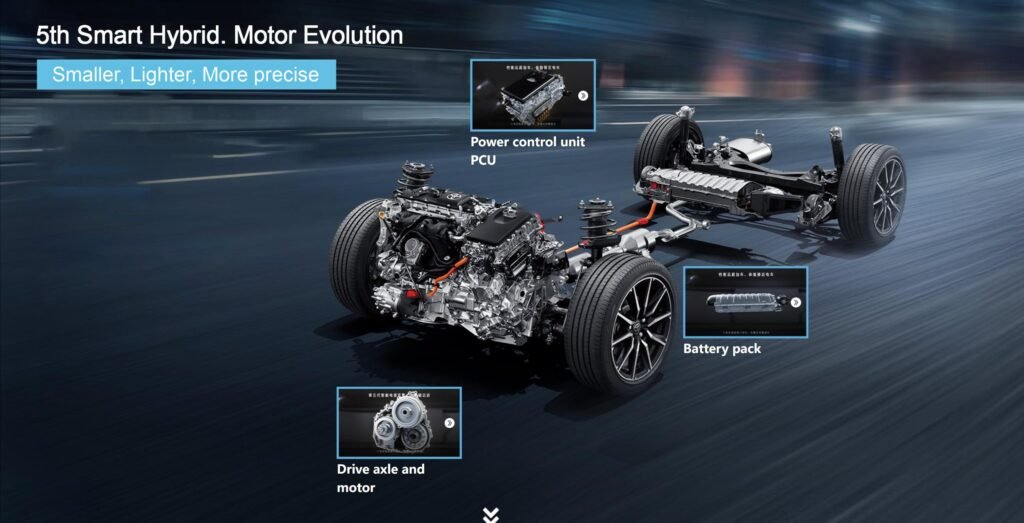
- Same Price: In China, a hybrid Toyota costs almost the same as a petrol one.
- Big Savings: Compared to importing Japanese hybrids, buying Chinese-made saves you 30% to 40% on the purchase price.
- Same Price: In China, a hybrid Toyota costs almost the same as a petrol one.
- No Fear: Toyota’s batteries are safe and reliable. With over 20 years of history, there are zero explosions or fires. Your customers will love the fuel savings, especially in hot climates where air conditioning runs all day.
IV. 🚙 The Right Cars For Your Market
Toyota’s lineup in China is perfectly matched to the needs of developing economies. These are the models that sell themselves.
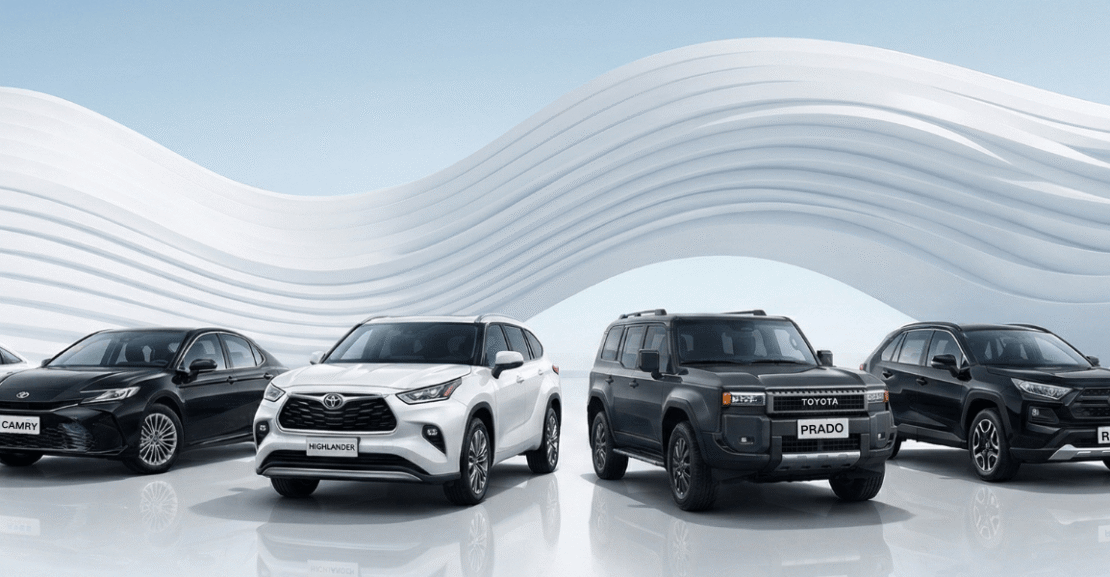
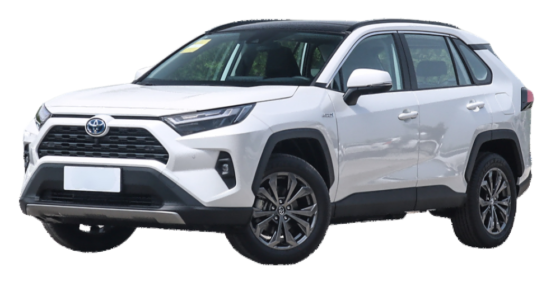
- RAV4 (Frantlander): This is the SUV that dominates the road. Whether in dusty rural areas or busy cities, the RAV4 handles it all. It is the top choice for families and businesses in markets like Kazakhstan, Russia, and the Middle East. Its high ground clearance and durable suspension make it ideal for rough roads.
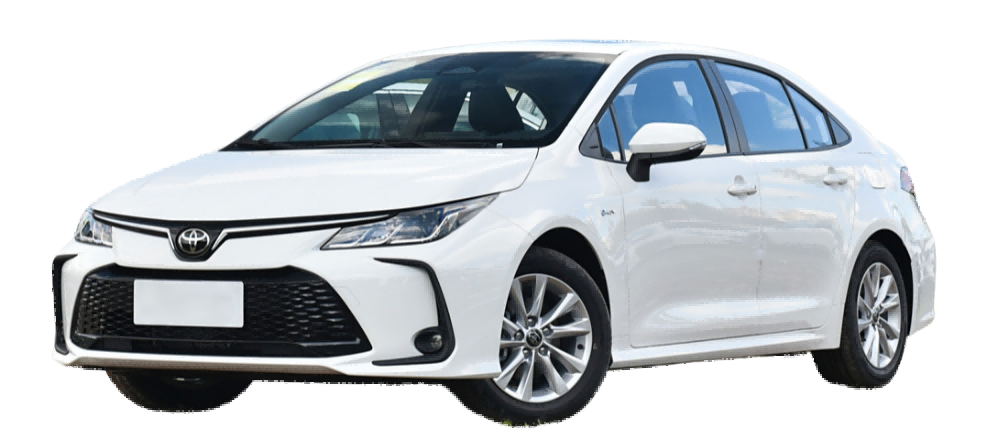
- Corolla (Levin): The world’s most popular sedan. In Nigeria, Ethiopia, and beyond, the Corolla is the benchmark for used cars. It is cheap to repair, parts are everywhere, and it drinks very little fuel. For taxi drivers and first-time car buyers, this is the gold standard.
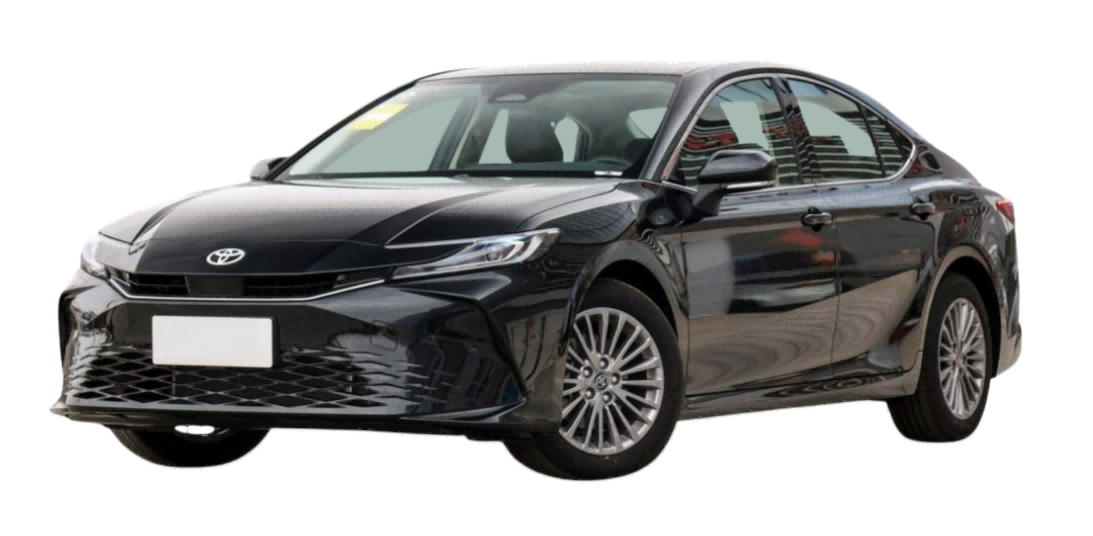
- Camry: In the Gulf States and North Africa, people want comfort without the luxury price tag. The Chinese-made Camry offers premium features and a smooth hybrid engine. It is perfect for business owners and government officials who demand quality.
V. 💰 Guaranteed Profit & Fast Turnaround
As a dealer, your money is your stock. Chinese Toyotas turn into cash quickly.
Faster Than Ships: Worried about delivery time? Don’t be. Using the China-Europe Railway or direct ports, you can get cars to Djibouti, Dubai, or Istanbul in just 15 to 20 days.
High Resale: A 3-year-old RAV4 or Camry from China holds over 65% of its value. This means your customer can afford the monthly payment, and you still make a healthy margin.






VI. Conclusion: Seize China’s Opportunity, Lead the Market
The facts are clear. Chinese-made Toyotas offer the quality of Japan, the price of China, and the durability the world trusts.
By adding RAV4s, Corollas, and Camrys from China to your inventory, you are not just buying cars. You are buying fast sales, happy customers, and bigger profits.
Source the best. Source Chinese-Made Toyota.
#ChineseMadeToyota #ToyotaUsedCars #GlobalUsedCarTrade #HybridCars #EmergingMarkets #CarDealerBusiness #UsedToyota #ImportExportCars #ToyotaHybrid #UsedCorolla