Key Takeaways: China’s auto parts exports exceeded $90-100 billion in 2025, solidifying its role as a global supply hub. The landscape is evolving: traditional body/brake parts remain the base, but new energy and smart components are the new growth engines. The market is shifting from reliance on the US/EU aftermarket to a dual-drive model of vehicle-led exports and local OEM supply. For global buyers, Chinese suppliers are no longer just a low-cost option; they are strategic partners offering a mix of cost-competitiveness, rapid tech iteration, and supply chain resilience. However, geopolitical and compliance risks remain critical challenges.
1. Market Overview: The $100 Billion Powerhouse
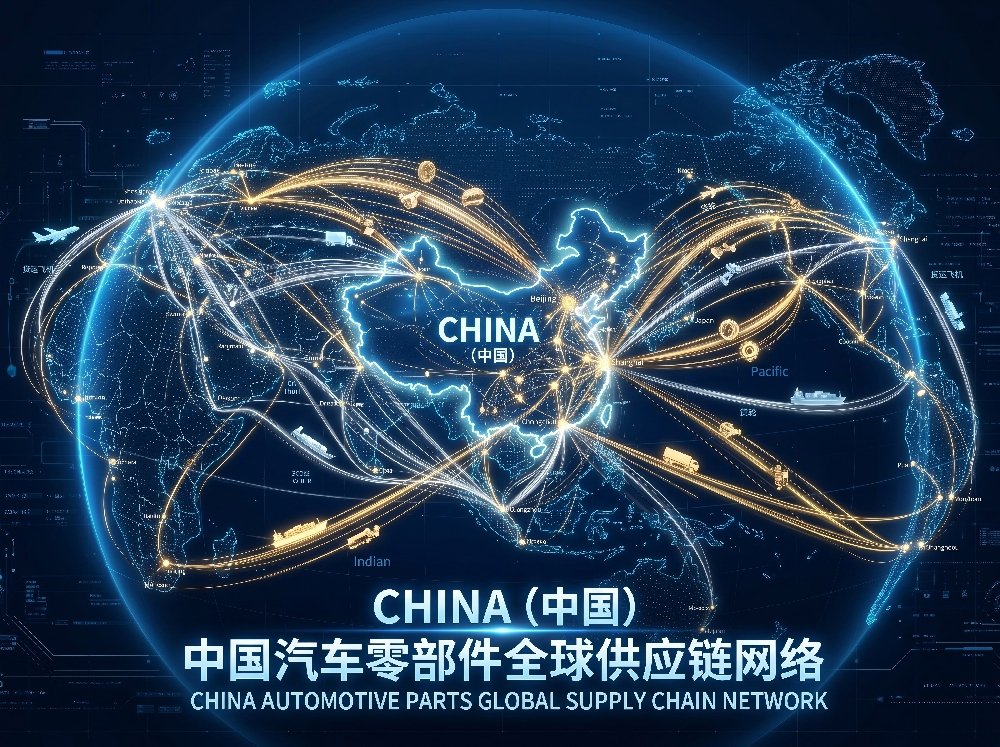
China is not only the world’s largest vehicle exporter but also a cornerstone of the global automotive aftermarket and supply chain. According to data from the General Administration of Customs of China, auto parts exports have shown remarkable stability.
Year | Export Value (USD Billion) | YoY Growth | Industry Characteristics |
|---|---|---|---|
2021 | 75.58 | 33.8% | Post-pandemic global restocking boom |
2022 | 81.21 | 7.5% | Record high, driven by new energy |
2023 | 87.66 | 9.0% | Structural optimization, higher value-added share |
2024 | 93.44 | 6.6% | Growth stabilizing on a larger base |
2025 | ~90-100* | ~4-5% | *Value growth, not just volume |
Insight: The era of pure volume growth is over. The focus is now on value capture (moving from simple stamped parts to high-value modules) and business model evolution (from trade to local production).
2. Product Segment Analysis: From "Stamped Parts" to "Smart Components"
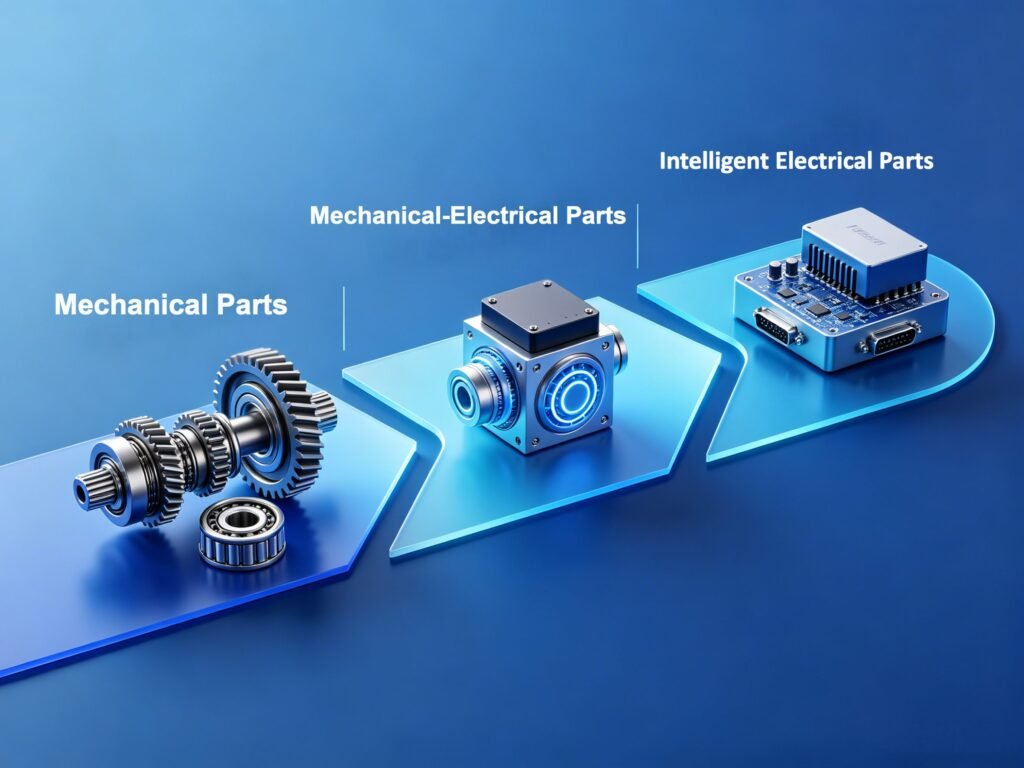
2.1 Traditional Strongholds (The Base)
These are mature products where China dominates through complete tooling and mass-production capabilities.
Category | 2025 Export Value (Est.) | Competitive Landscape & Trend |
|---|---|---|
Body Parts (Body-in-White, Panels) | ~$10 Billion | Largest category by value. Advantage lies in 40% faster tooling development. Shifting towards aluminum and composite materials for lightweighting. |
Braking System (Discs, Pads, Calipers) | ~$8.1 Billion | Evolving from basic parts to Brake-by-Wire (BBW). Companies like Bethel are supplying global EV makers. |
Wheel Systems (including Aluminum) | ~$7 Billion | Impacted by “double-reverse” investigations. Leaders like Lizhong, Wanfeng are building plants in Mexico/SE Asia. |
Suspension/Shock Absorbers | ~$5.5 Billion | Aftermarket staple. Highly commoditized at the low end. |
2.2 High-Growth Segments (The Engine)
These are the core drivers of export value, reflecting China’s technological premium.
NEV Powertrain (Battery, Motor, E-Axle): Export growth (20-30% YoY) outpaces the industry. This includes battery cells/modules, BMS, and drive motors. CATL leads, but many follow.
Smart & Connected Components: In-vehicle displays, smart cockpit domain controllers, and advanced lighting systems (from illumination to interaction) are seeing rapid export growth.
Thermal Management Systems: EV battery thermal management is a key growth area. Companies like Sanhua and Yinlun have successfully cross-over, winning global contracts.
3. Channels & Business Models: OEM Growth and E-commerce
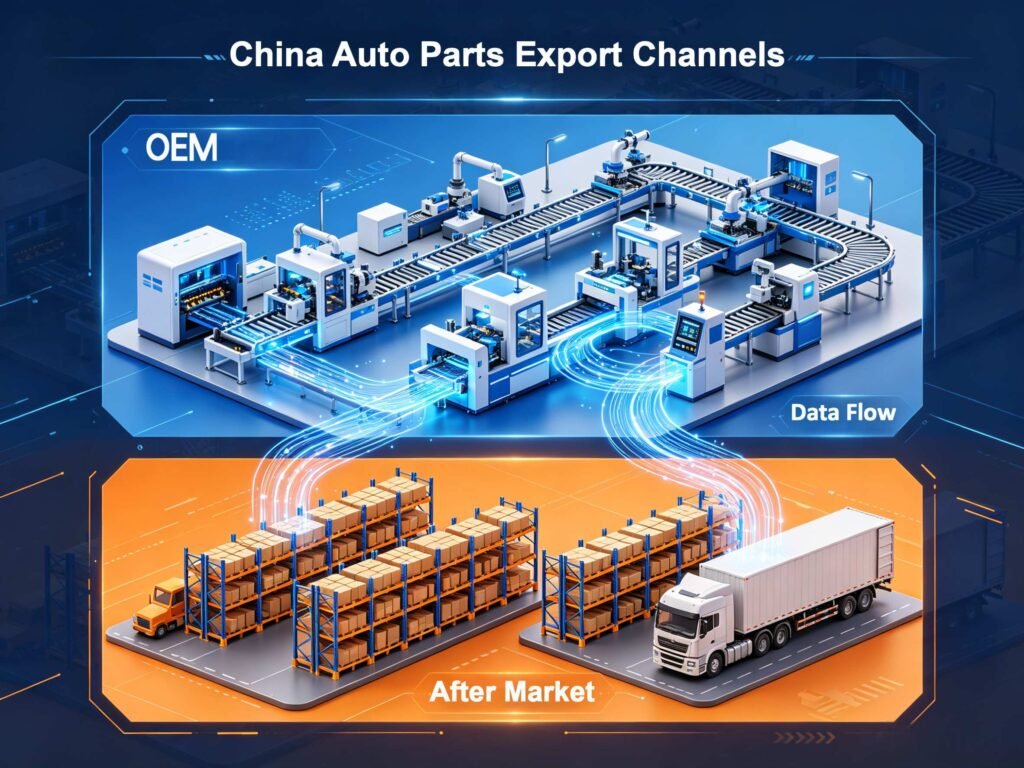
3.1 Channel Evolution
Aftermarket (AM): Traditional channel. Parts reach repair shops and end-users via distributors (e.g., NAPA in the US) and online platforms (Amazon, eBay). Stable demand in aging vehicle markets (avg. vehicle age >12 years in US/EU).
OEM/Original Equipment: The fastest-growing channel. Chinese suppliers are “riding along” with global expansions of automakers like BYD, Chery, and Geely. At the same time, leaders like CATL and Fuyao Glass supply directly to global OEMs like Tesla, BMW, and Volkswagen.
3.2 Delivery Model Upgrade
Direct Export: Still significant but increasingly hampered by tariffs (e.g., Mexico’s duties on Chinese parts).
Overseas Warehouse + Localization: Major sellers use overseas warehouses in the US/EU to cut delivery to under 7 days.
Greenfield Investment: Leading firms (e.g., Minth, Tuopu Group) are building plants in Mexico and Eastern Europe. This enables “In Region, For Region” supply, bypassing trade barriers.
4. Regional Markets: From Single-Market Dependence to a Global Network
4.1 Mature Markets (Deepening Penetration)
North America (US/CA/MX): Still the #1 export destination. The logic has changed. Mexico is now the critical gateway. Chinese firms set up plants there to access the US market tariff-free under USMCA rules (≥75% regional value content).
Europe: Has the strictest quality and carbon footprint rules (EU Battery Regulation). Germany and Poland are key hubs. NEV-related parts (battery housings, thermal management) are growing fastest.
4.2 Emerging Markets (Breakthrough Growth)
Southeast Asia (Thailand, Vietnam, Malaysia): Benefiting from Japanese and Chinese automaker investments. Local sourcing demand for body and electrical parts is growing over 30% annually.
Russia & CIS: European supply chain exit has created a vacuum. Chinese parts have filled the gap, with market share rising significantly in 2025 (~$590 million incremental exports).
5. Future Outlook & Risk Alert (2026-2030)
5.1 Key Trends
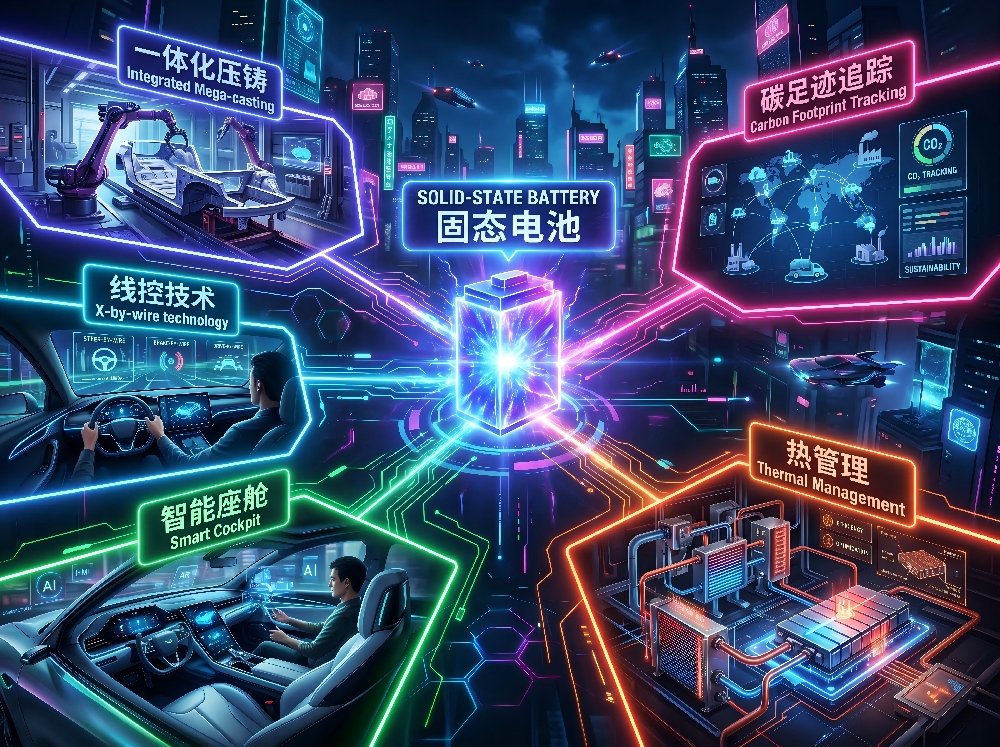
Technology Premium is the New Normal: The era of selling cheap metal is over. Brake-by-Wire, air suspension, and pre-research on solid-state batteries will become standard for leaders. Overseas gross margins will stay higher than domestic.
Supply Chain Regionalization: A “China HQ (R&D) + Mexico (for N. America) + E. Europe/SE Asia (for EMEA/Asia)” triangle will form to mitigate geopolitical risks.
Digital-First Exports: Cross-border e-commerce (e.g., product demos on TikTok Shop) will become a new channel for SMEs in the aftermarket.
5.2 Risk Warnings (For Global Buyers)
Compliance Risk: EU’s new Battery Regulation and Carbon Border Adjustment Mechanism (CBAM) will significantly increase compliance costs. Buyers must ensure suppliers provide full carbon footprint reports.
Geopolitical Risk: U.S. Section 301 tariffs and Mexico’s anti-dumping duties are volatile. Orders relying solely on direct exports are unstable. Prioritize suppliers with overseas production capacity.
IP Risk: Patent litigation risks are rising in smart/connected segments. Conduct thorough Freedom-To-Operate (FTO) analysis before partnership.
Conclustion:
China’s auto parts export sector has entered a “deep water” phase of quality-driven growth. For global OEMs and Tier 1s, the Chinese supply chain is no longer just a cost-saving option. It is a strategic partner offering rapid tech iteration and resilient supply. The future lies in the deep integration of “Chinese technology” with “global-local manufacturing.”
Data Sources: General Administration of Customs of China, China Association of Automobile Manufacturers, All-China Federation of Industry and Commerce (2025-2026 statistics). This report is for industry reference only.